
A cordless leaf blower can make routine yard cleanup faster without the fuel, extension cord or storage demands of a larger machine. The challenge is that battery voltage and maximum air-speed figures do not tell the whole story. A useful blower must move the kind of debris you actually have, remain comfortable for the length of the job and share a battery system that makes sense for your other tools. This guide explains the practical details to compare before buying.
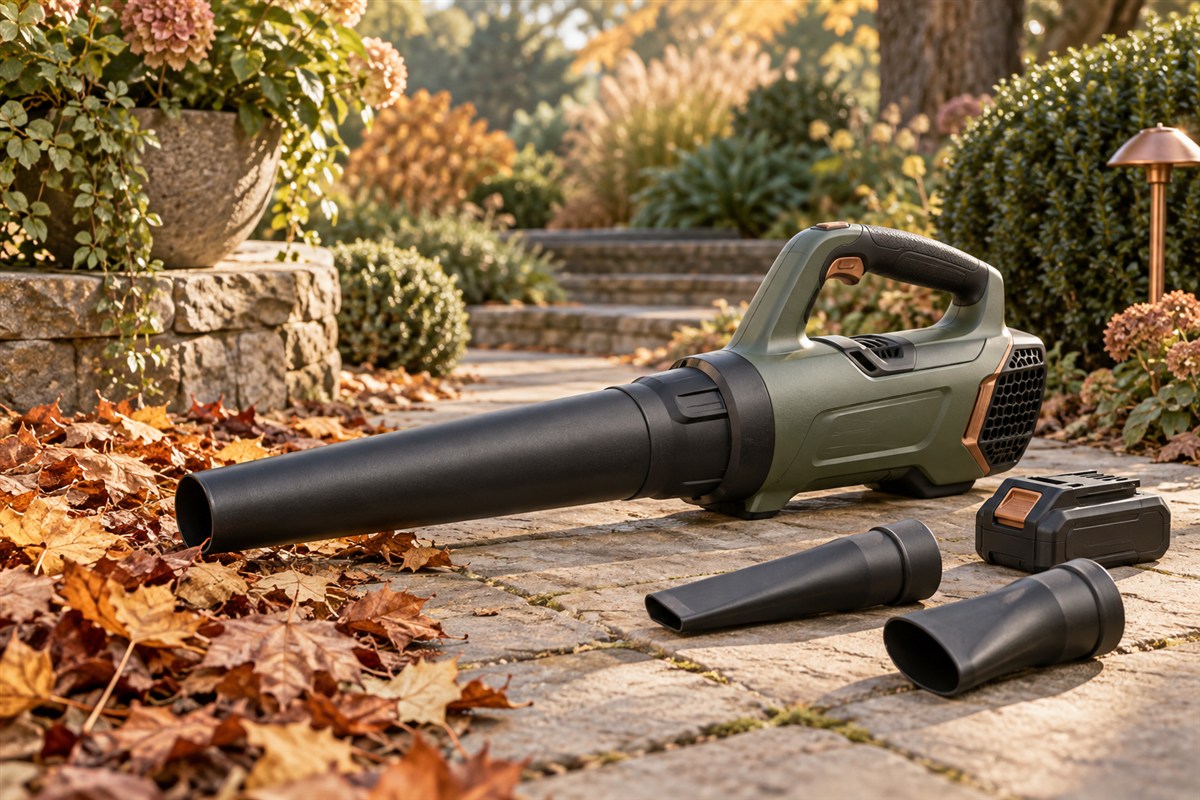
Begin with the cleanup you do most often
Dry leaves on a paved path require much less effort than wet leaves caught in long grass. Write down the surfaces you clean, the typical area and whether you also need to move grass clippings, small twigs or light snow. A compact blower may be ideal for a patio and garage, while a larger property can justify a higher-output model with a second battery.
Also consider how close the work area is to neighbors and windows. Noise, dust and the direction of the airflow affect when and where the tool can be used. A variable trigger makes it easier to clear delicate garden beds without scattering mulch, then increase output for open ground.
Compare airflow and air speed together
Manufacturers commonly publish airflow in cubic feet per minute and air speed in miles per hour. Airflow describes the volume of air being moved, while speed helps describe how forcefully it leaves the nozzle. Neither number should be used alone. A narrow nozzle can produce an impressive speed but move a relatively small amount of material. For broad piles of leaves, usable airflow and nozzle design are often more important than the highest speed printed on the box.
Look for measurements in the normal operating mode as well as a short boost mode. Boost can help release stubborn debris, but it may drain the battery quickly and increase noise. A well-designed blower should do most work without requiring maximum output continuously.
Treat runtime as a range
Battery runtime changes with speed, temperature, battery age and the resistance created by the nozzle. A quoted figure at the lowest setting may not represent normal cleanup. Reviews that state the battery capacity and operating mode are more useful than a single runtime claim. Estimate how long your regular job takes and keep a margin for heavier seasonal work.
The battery platform can matter more than a small difference in tool price. If you already own compatible garden or workshop tools, sharing batteries reduces cost and keeps a charged spare available. New buyers should check the price of an additional battery, the charger speed and whether batteries of different capacities fit the same tool.
Check balance, controls and nozzle length
A blower is held away from the body, so a modest weight can feel tiring after repeated sweeping movements. Balance matters as much as the number on the scale. The handle should allow a neutral wrist position, and the battery should not make the rear of the tool feel difficult to control. Try the blower with a battery installed because an empty display model gives a misleading impression.
Check whether the nozzle reaches close to the ground without forcing you to bend. A removable or adjustable tube can improve storage, but the connection should stay secure. Cruise control is helpful during long passes, while a responsive variable trigger provides better control around gravel, plants and parked vehicles.
Think about noise and maintenance
Cordless blowers avoid engine maintenance, yet they are not silent. Compare sound measurements when available and use hearing protection according to the manufacturer’s guidance. Lower speeds are often sufficient for hard surfaces and create less noise and airborne dust.
Keep the air intake clear of clothing and leaves, wipe debris from the housing and inspect the tube connection. Store lithium batteries away from extreme heat and do not leave them fully discharged for long periods. Following the recommended storage charge and temperature helps preserve useful capacity.
A practical final checklist
Before ordering, confirm that the blower can handle your normal debris without relying on boost, that the expected runtime covers the property, and that the complete tool feels balanced with its battery attached. Price a spare battery if seasonal work can exceed one charge. Check the warranty for both the tool and battery, since their coverage periods may differ.
The best cordless leaf blower is not automatically the model with the largest voltage or fastest air-speed claim. It is the one that moves debris efficiently at a controllable setting, remains comfortable until the job is finished and fits a battery system you can maintain over time.