
Buying a lawn mower involves more than choosing between budget and premium versions. The real question is how reliably each option supports cutting a specific lawn size with manageable storage and maintenance. Space, frequency of use, noise, power, materials and user comfort can all change the answer. A short list built around those constraints is more dependable than a list built around popularity alone.
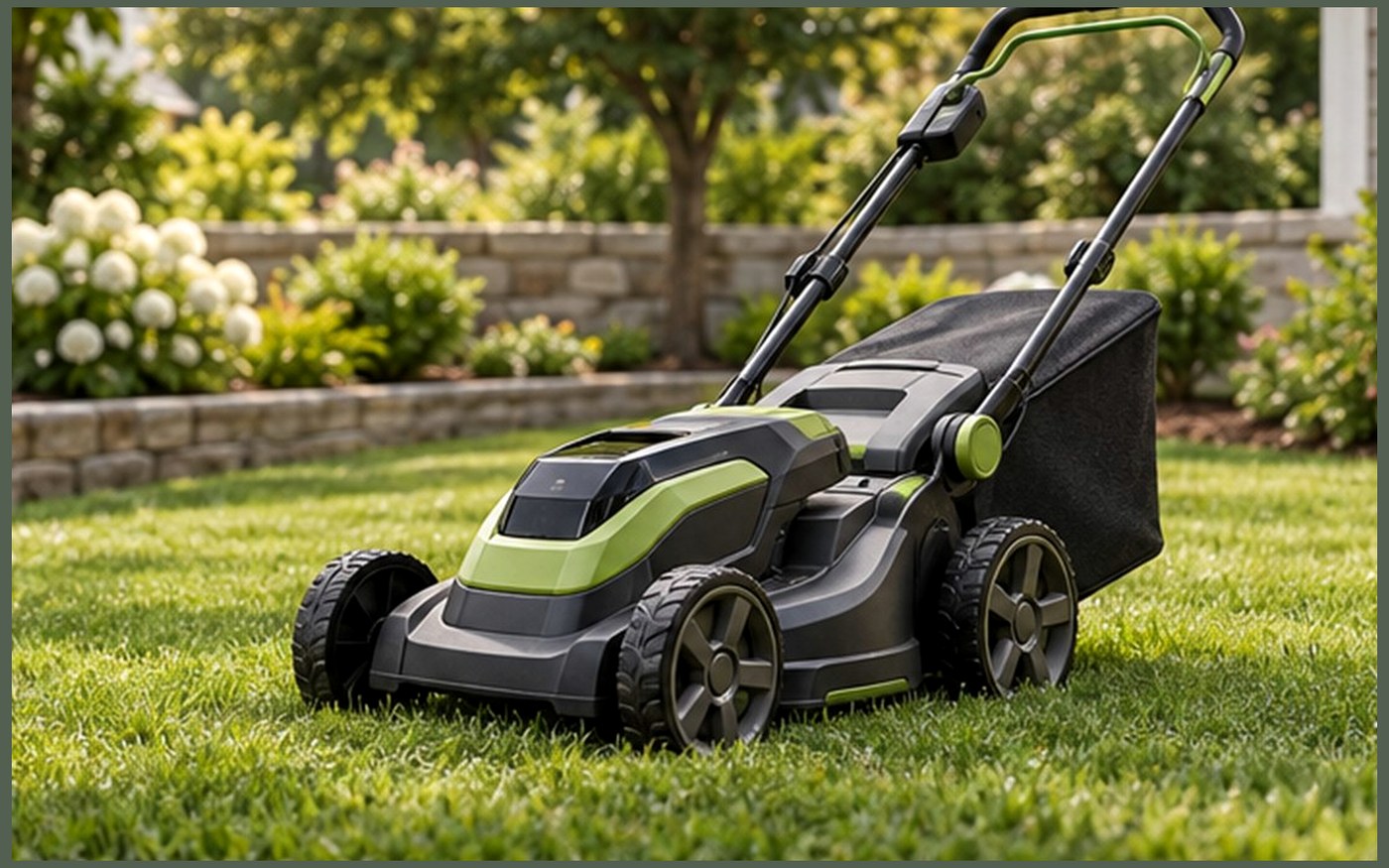
Decide what good performance means
Start by describing a successful result for cutting a specific lawn size with manageable storage and maintenance. Note the usual workload, the most demanding regular workload and any limit that cannot be changed. That limit may be storage space, a doorway, available electrical power, carrying weight, operating noise or the time available for cleanup. Frequency matters too: equipment used every morning rewards quick controls and easy cleaning, while occasional equipment can justify a longer setup if it stores compactly. Writing these conditions first prevents attractive extras from displacing basic suitability.
Measure the environment instead of estimating it. Record relevant room dimensions, travel distance, device connections, surface types or serving quantities. Identify who will use the product and whether grip, display size, reach or adjustment range could exclude someone. These observations create a minimum standard for the shortlist and make reviews easier to interpret because you can compare their test conditions with your own.
Compare the numbers that affect results
The first technical comparison should cover deck width, power source and cutting-height range. These characteristics influence whether a lawn mower completes the main task efficiently. Published ratings can still help, but only when the test method is clear. Maximum output may last for a short boost period, capacity may exclude unusable space, and runtime may be measured at the lightest setting. Look for normal-mode results and leave reserve capability for colder weather, heavier loads, aging batteries or other predictable changes.
A second group of details deserves equal weight: self-propel control, bagging performance and maneuverability. They shape consistency and often explain why similarly priced products receive different long-term reviews. Check whether adjustments have useful intermediate steps, whether essential status information is visible and whether common accessories use standard sizes. Reliable operation at a moderate setting is usually more valuable than unstable performance at a spectacular maximum.
Recreate a normal week of use
For a useful trial, mow a slope, a narrow passage and damp grass while noting control effort. Keep the input and settings consistent across candidates. Observe not only the final result but also setup time, corrections, heat, noise and the number of interruptions. Repeat the difficult portion of the test, because one successful run may hide inconsistent behavior. When shopping online, favor demonstrations that show the entire process and state the model, accessories and settings instead of presenting only a finished result.
Check the most demanding realistic condition as well as an easy one. Use the heaviest, coldest, longest, busiest or least convenient version of the intended task, whichever is relevant. The goal is not to force failure; it is to learn how gracefully the product approaches its practical limit. Predictable changes are easier to manage than sudden failure or unexplained variation in results.
Avoid a common buying error
A frequent mistake in this category is selecting a wide heavy mower for a yard full of tight turns. The shortcut is appealing because it turns a complicated decision into a single comparison, but it hides operating conditions and trade-offs. Check whether the headline result requires maximum power, a special accessory or an ideal environment. Then ask what happens to noise, runtime, accuracy or comfort at that setting. A balanced design that performs steadily is often the safer choice.
Purchase price is only one part of value. List the consumables, replacement parts and optional accessories that apply to this product, then estimate what may be needed during two or three years. Confirm that essential replacements are sold separately and are likely to remain available. A low initial price can become expensive when a proprietary component has a short life, while a higher price may be reasonable when serviceable parts and a longer warranty reduce replacement risk.
Inspect fit, access and feedback
Imagine one complete session with a lawn mower. Include retrieval from storage, any required setup, the main task, cleanup and putting everything away. Count the separate pieces and notice which steps require tools, special supplies or extra working space. Frequently used adjustments should be easy to reach and understand. If possible, handle the product with the accessories and typical load you expect to use; a stripped-down display sample can give a false impression of balance and convenience.
Construction details are part of usability. Inspect seams, edges, fasteners, latches, zippers, joints and removable pieces wherever they apply. Parts that are opened, folded, adjusted or washed repeatedly deserve close attention because they often wear before the main body. Clear markings and a design that is easy to inspect also make routine care more predictable.
A final decision framework
Long-term care should be realistic for the household. A sound baseline is to keep blades sharp, clear clippings and follow battery or engine storage guidance. Read the manual's schedule before buying and check whether routine service requires uncommon tools or supplies. Pay attention to the storage conditions that apply to the materials and components used. If the product will sit unused for a season, confirm the recommended cleaning, drying, protection and storage steps.
Build a shortlist of three options and score each against the same priorities: performance for the main job, control, daily handling, ongoing cost, service support and storage. Give extra weight to requirements that cannot be fixed later, such as physical dimensions, system compatibility or adjustment range. Treat cosmetic preferences and rarely used modes as tie breakers. Before ordering, verify the included accessories, return conditions and separate warranty terms for batteries or consumable components.
The best lawn mower is the option that meets the regular workload with some reserve, remains straightforward through the full routine and can be maintained at a reasonable cost. A careful comparison may lead to a less dramatic specification sheet, but it is more likely to produce dependable results.